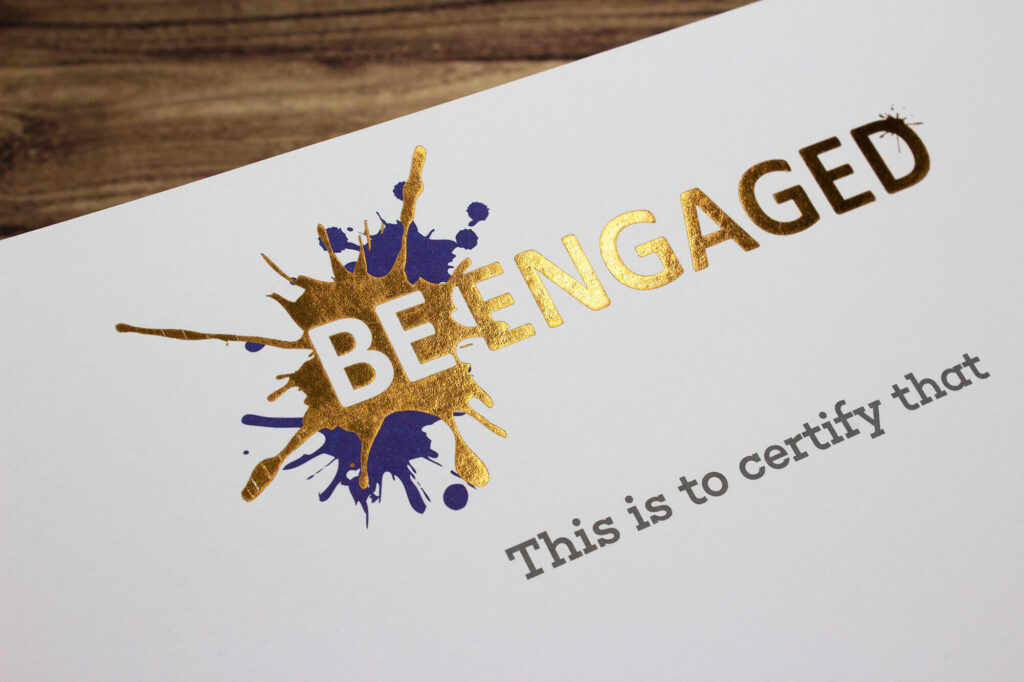
Foil block printing is a unique process. It uses a moulded metal die which is heat-stamped onto the paper with an ultra-thin sheet of metal foil in between. This transfers the metal foil to the paper in the shape of the die. It’s also known as hot foil printing because of the heat used in the process.
Foil blocking is generally used to great effect as an embellishment to a luxury brochure or piece of direct mail. Most commonly, it’s used as part of a corporate brand within the logo or to highlight a landmark in company history (silver for 25 years etc).
However, foil printing can also be used in many other ways to enhance a design. Use it within illustrations to pick out flourishes, or to pick out a patterned background (geometric lines work really well). You can
also use font as art with hot foil printing. Check out some of our images below for inspiration!
It’s generally taken for granted that foil block is silver or gold as they are the most common colours. But there’s far more to it than that; foil blocking is available in a huge range of different colours as well as some
really special effects including:
• Holographic
• Pearlescent
• Textured
• Clear
• Gloss or matt
• Almost any colour


– Quick Delivery
– Low Cost
– Is ideal method of producing short to medium print runs compared to traditional methods.
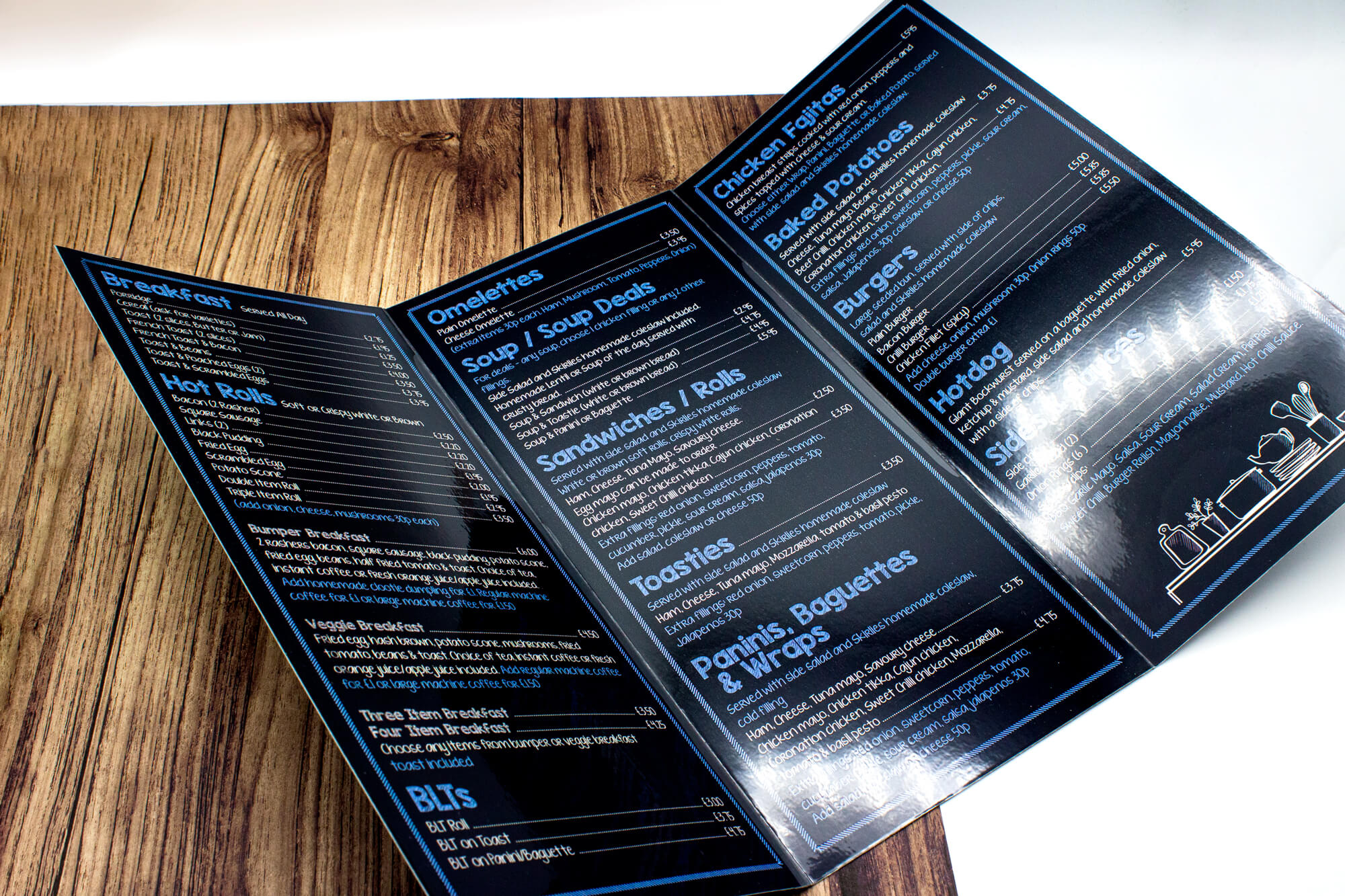
Offers a faster and more efficient process, Digital printing can run cheaper than traditional forms of print, you print only as much as you need with digital, but with Litho printing there is a minimum amount, it’s also faster to set up making it ideal for small print jobs.
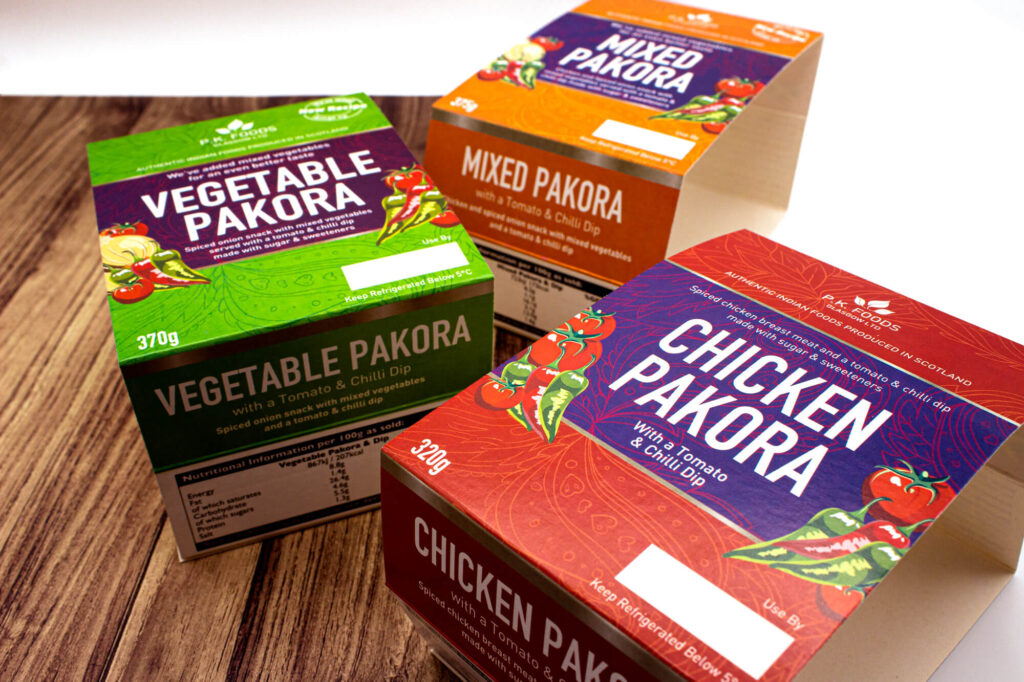
Our printed food packaging & food sleeves give your products an extra visual boost on the shelf and provide protection in transit. Food sleeves are a great way to promote your brand and help it stand out. Our food packaging sleeves are totally customised to fit your food tubs, trays, boxes and shrink wrap products.
We can also design the print ready artwork for you
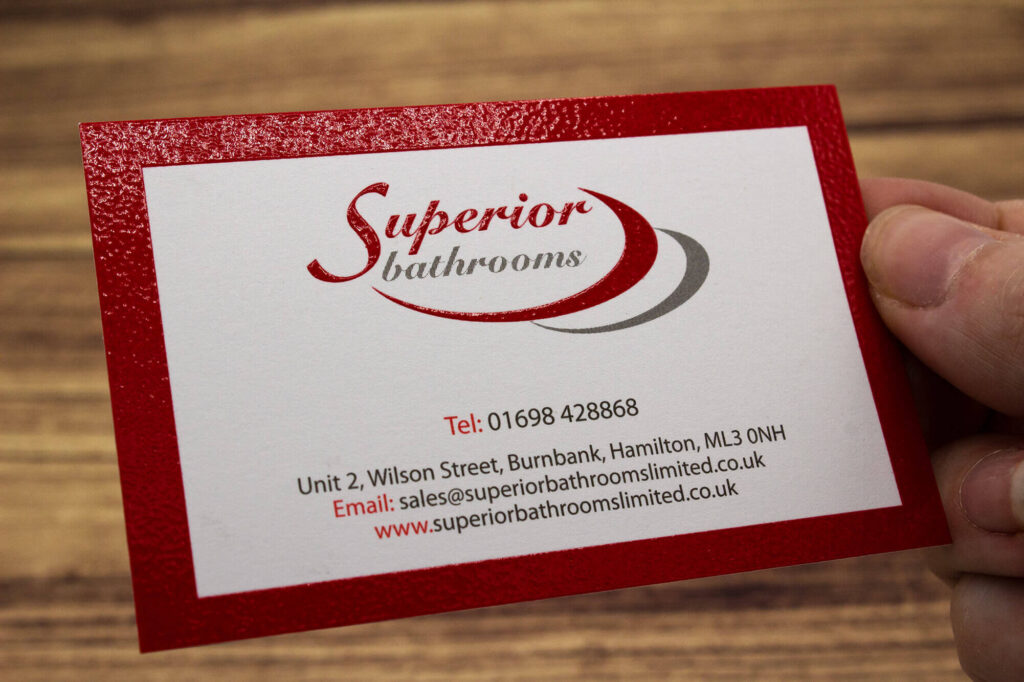
Also known as Thermographic Printing, Raised Ink Printing and Offset Thermography, is a cost-effective alternative to achieve a raised effect similar to engraving and embossing. Thermography is widely regarded as an appealing and preferred printing process that adds prestige to any printed piece.
Raised printing looks professional and eye-catching. Thermography is a much cheaper alternative to engraving or embossing. It literally adds another dimension to the printed piece. Because the ink is heated and dried after passing through the heat tunnel, the printed piece is completely dry and can be trimmed or packaged immediately.
The most common use for Thermography printing is for business cards and business stationery. It is also used for wedding invitations, greeting cards, report covers and other printed items. You can also apply Thermography to specific portions of the sheet only, thereby creating a special effect that is not achievable using any other means.
This is essentially the inverse of blind embossing. Rather than the image coming up, out of the paper, it is pressed into the material to leave an indented texture. When done on a larger, block area this is referred to as ‘Plate Sinking’. This is common when mounting pictures into Christmas or greetings cards as the photographs can be stuck into the area that has been ‘plate sunk’ (blind debossed).
These techniques can be very effective when used on already textured/embossed papers as the blind
emboss/deboss will flatten out this texture in the image area creating a striking contrast.
It is important to bear in mind when creating artwork or text for blind embossing that the lines of the image or wording are not spaced too closely together as this runs the risk that there will not be enough room for the image to be effectively formed within the paper. On thinner papers this can also cause the sheet to bow and bend.
What is Blind Embossing?
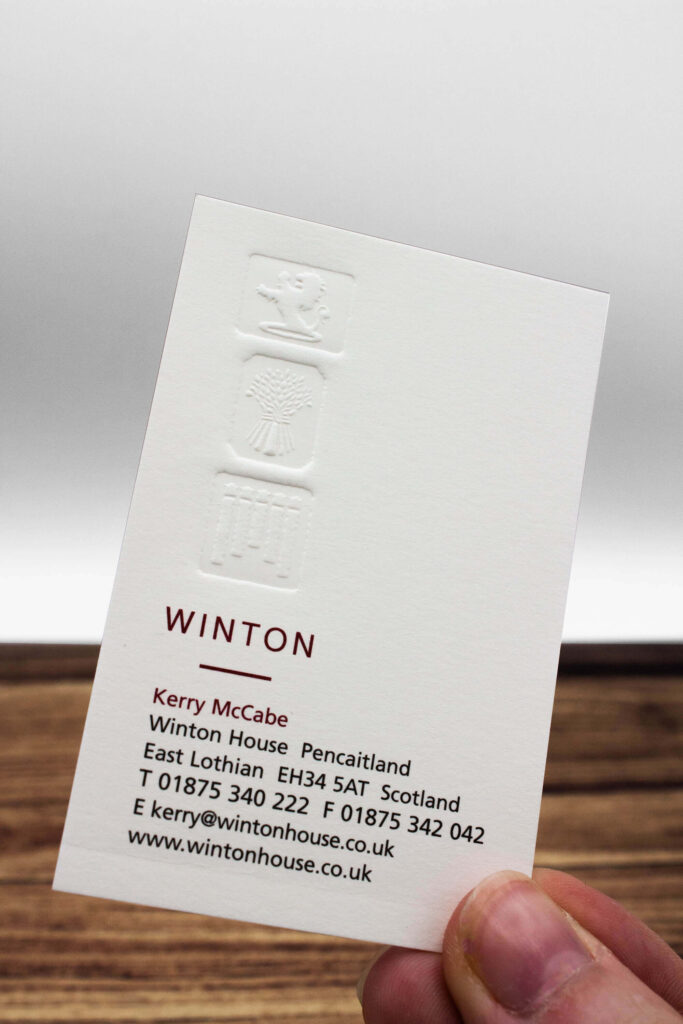
Blind embossing is very similar to the printing technique of die stamping or engraved printing. However, by not applying the ink (and simply using the force of the machine to push the paper into the metal die to leave a raised impression) an image is created where highlights and shadows define the typography or graphic. This very subtle technique can be used on a huge array of different papers and card to produce incredibly sophisticated invitations & stationery that can be both seen and felt.
Monday-Friday
8am-4.30pm
Sat-Sun
CLOSED
Privacy Policy